Share Park Meadows Bike and Ped Projects on FacebookShare Park Meadows Bike and Ped Projects on X (formerly Twitter)Share Park Meadows Bike and Ped Projects on LinkedinEmail Park Meadows Bike and Ped Projects link
Overview
Through 2027, Park City Municipal is upgrading about 65% of all bus stops citywide (see our Bus Stop Improvement page). As new stops and shelters are built, the City is also filling key gaps in the pedestrian and bicycle network to make it safer and easier for people of all ages to walk, roll, or bike—whether to a bus stop or other destinations.
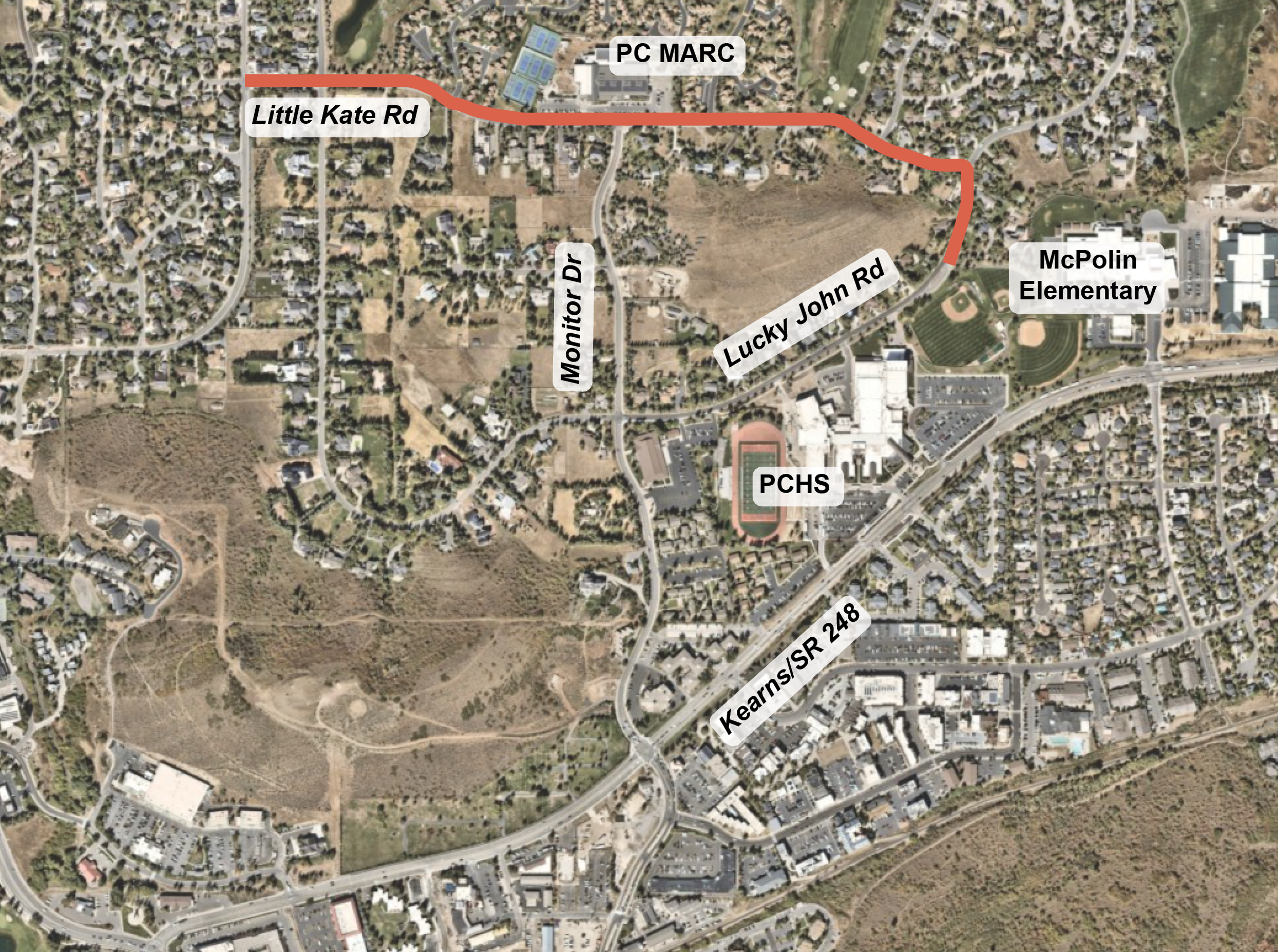
Building on community feedback from the Pedestrian & Bicycle Plan, Park City Forward, Neighborhoods First Streets Program, and a Little Kate Road Alternatives Survey, the City is progressing active transportation improvements in the Park Meadows neighborhood. Supported by a mix of federal, county, and local funding, we are evaluating improvements along Little Kate Road and Lucky John Drive to enhance walking and biking facilities, calm traffic speeds, and strengthen Safe Routes to School connections for students and families.
Little Kate Road
Little Kate is currently a two-lane, 20 mph road with conventional bike lanes in both directions and a sidewalk on the north side of the roadway.
What We Started With
Little Kate carries medium volumes of bicyclists and pedestrians, with a roadway width of about 40 feet.
The existing sidewalk on the north side of the corridor directly accesses the MARC and is along a Safe Route to School
Existing bike lanes are inconsistent, with multiple residents riding on the sidewalk to avoid conflicts with vehicles.
Based on FHWA guidance and public input, staff strongly considered designs that support “all ages and abilities.”
Little Kate Road Existing Cross-SectionHow We Got Here
To inform the project, staff reviewed vehicle speeds, traffic volumes, and pedestrian and bicycle activity along Little Kate Road. Traffic varies along the street, with up to ~6,000 cars per day in the busiest area near the MARC. Speed data show the 85th percentile (85% of vehicles are at or below) is around 28 mph, which is above the posted 20 mph limit. At those speeds and traffic volumes, the street is on the higher end of what typically feels comfortable for people biking, especially children and less experienced riders. The City has also collected pedestrian and bicycle counts near the MARC. In a 24-hour period in September 2025, staff counted 107 people walking and 172 people biking, with walkers making up roughly 30 to 40% of users and bicyclists 60 to 70%.
Roadway improvements were further refined based on community feedback and alternatives analysis. Following an online survey and the Little Kate Road Open House in June, the painted buffered bike lane concept received strong community support, with 87% support among Open House participants and 75% support among online survey respondents. Traffic calming also emerged as a consistent community priority. Staff presented these findings and discussed the project with City Council on July 9 and August 13, 2026.
What's Next?
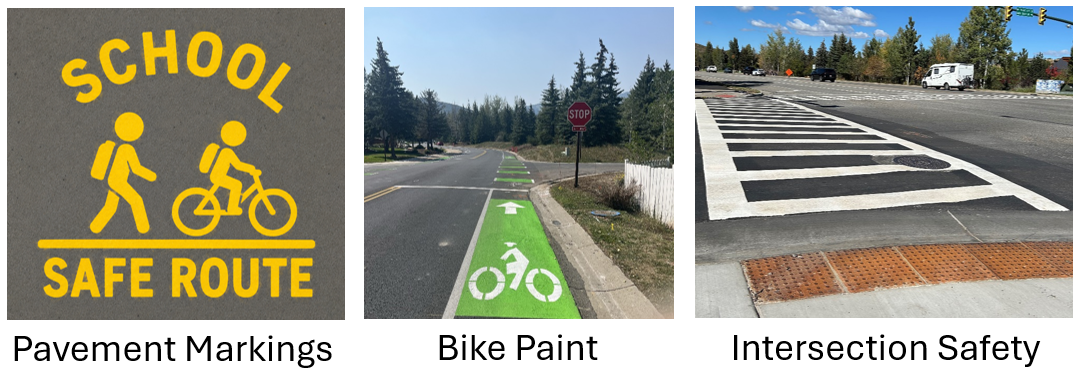
The project team will move into design with a painted-buffer bike lane, a widened sidewalk, and traffic calming on Little Kate Road. Safety features such as speed feedback signs, high-visibility bike lane paint, intersection improvements, and pavement markings will also be considered. The project team will return to Park Meadows to discuss the design later this year (2026). Construction is anticipated in 2027. Moving Into Design: Bike lanes with a painted buffer, widened sidewalk where accommodated
Additional Safety Features
Engagement Opportunities
The Project Team will return to Park Meadows in Fall, 2026, with refined design for buffered bike lanes and traffic calming along Little Kate.
Overview
Through 2027, Park City Municipal is upgrading about 65% of all bus stops citywide (see our Bus Stop Improvement page). As new stops and shelters are built, the City is also filling key gaps in the pedestrian and bicycle network to make it safer and easier for people of all ages to walk, roll, or bike—whether to a bus stop or other destinations.
Building on community feedback from the Pedestrian & Bicycle Plan, Park City Forward, Neighborhoods First Streets Program, and a Little Kate Road Alternatives Survey, the City is progressing active transportation improvements in the Park Meadows neighborhood. Supported by a mix of federal, county, and local funding, we are evaluating improvements along Little Kate Road and Lucky John Drive to enhance walking and biking facilities, calm traffic speeds, and strengthen Safe Routes to School connections for students and families.
Little Kate Road
Little Kate is currently a two-lane, 20 mph road with conventional bike lanes in both directions and a sidewalk on the north side of the roadway.
What We Started With
Little Kate carries medium volumes of bicyclists and pedestrians, with a roadway width of about 40 feet.
The existing sidewalk on the north side of the corridor directly accesses the MARC and is along a Safe Route to School
Existing bike lanes are inconsistent, with multiple residents riding on the sidewalk to avoid conflicts with vehicles.
Based on FHWA guidance and public input, staff strongly considered designs that support “all ages and abilities.”
Little Kate Road Existing Cross-SectionHow We Got Here
To inform the project, staff reviewed vehicle speeds, traffic volumes, and pedestrian and bicycle activity along Little Kate Road. Traffic varies along the street, with up to ~6,000 cars per day in the busiest area near the MARC. Speed data show the 85th percentile (85% of vehicles are at or below) is around 28 mph, which is above the posted 20 mph limit. At those speeds and traffic volumes, the street is on the higher end of what typically feels comfortable for people biking, especially children and less experienced riders. The City has also collected pedestrian and bicycle counts near the MARC. In a 24-hour period in September 2025, staff counted 107 people walking and 172 people biking, with walkers making up roughly 30 to 40% of users and bicyclists 60 to 70%.
Roadway improvements were further refined based on community feedback and alternatives analysis. Following an online survey and the Little Kate Road Open House in June, the painted buffered bike lane concept received strong community support, with 87% support among Open House participants and 75% support among online survey respondents. Traffic calming also emerged as a consistent community priority. Staff presented these findings and discussed the project with City Council on July 9 and August 13, 2026.
What's Next?
The project team will move into design with a painted-buffer bike lane, a widened sidewalk, and traffic calming on Little Kate Road. Safety features such as speed feedback signs, high-visibility bike lane paint, intersection improvements, and pavement markings will also be considered. The project team will return to Park Meadows to discuss the design later this year (2026). Construction is anticipated in 2027. Moving Into Design: Bike lanes with a painted buffer, widened sidewalk where accommodated
Additional Safety Features
Engagement Opportunities
The Project Team will return to Park Meadows in Fall, 2026, with refined design for buffered bike lanes and traffic calming along Little Kate.
 Little Kate Road Existing Cross-SectionHow We Got Here
 Moving Into Design: Bike lanes with a painted buffer, widened sidewalk where accommodated
 Additional Safety Features